

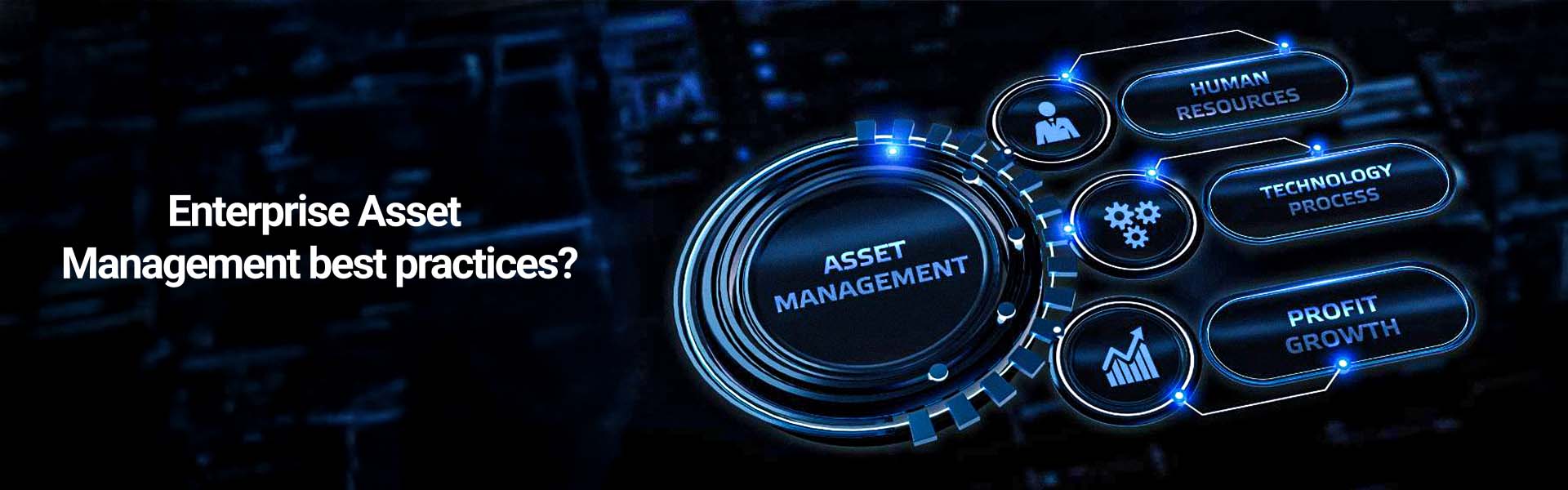
With an immense number of assets that an enterprise owns, managing and keeping track of each of them can be a big challenge. According to a 2024 report by ARC Advisory Group, unplanned downtime costs industrial companies an average of $260,000 per hour, and poor asset management is a leading cause. By implementing an EAM strategy, businesses can derive the best value from their operations by gaining better control over their equipment, machinery, and technology—reducing downtime, cutting maintenance costs, and extending asset lifespan.
Wondering how? Read on as we discuss Enterprise Asset Management in detail, while also addressing some frequently asked questions in this domain.
What is Enterprise Asset Management (EAM)?
Enterprise Asset Management (EAM) is the process of tracking, maintaining, and optimizing an organization’s physical assets – such as machinery, vehicles, equipment, and infrastructure – throughout their entire lifecycle to maximize value, minimize risk, and ensure operational efficiency.
EAM uses software, tools, and processes to reduce downtime, improve productivity, control costs, and enhance overall business efficiency.
Key facets include:
- Asset lifecycle management
- Maintenance planning and execution
- Asset movement tracking
- Cost and performance optimization
Enterprise Asset Management Benefits
Implementing EAM delivers measurable advantages for UAE enterprises:
- Reduced Downtime: Predictive and preventive maintenance cut unplanned outages by 30–50%.
- Lower Maintenance Costs: Automated scheduling and spare parts optimization reduce emergency repair expenses by 20–30%.
- Extended Asset Lifespan: Proper lifecycle management extends equipment life by 15–25%.
- Improved Compliance: Automated audit trails and reporting ensure adherence to ISO 55000, DORA, and UAE regulations.
- Better Resource Utilization: Real-time tracking reveals underutilized assets, enabling redeployment and cost savings.
- Enhanced Decision-Making: Dashboards and analytics provide actionable insights for procurement, budgeting, and risk management.
How Does EAM Work?
Since nowadays, asset tracking solutions and management are cloud-based, the software and data are stored online, just like any other cloud-based software, such as Google Drive. This allows you to simply log into your software and get access to required information in real-time. Let’s understand how it works.
Data Collection and Storage
Various asset information, such as location, usage, maintenance history, and condition, is stored online in one central place, which is the cloud.
Why it matters:
- You get cloud-based access control anytime, from anywhere.
- Everyone on the system who has access to the information can see the same up-to-date information.
- Using analytics tools, you can find out which assets are doing well and which ones need attention.
Example:
Instead of digging through folders to find out when a machine was last serviced, you can check the cloud system in seconds.
Strategy Development
Once you have access to the required data, you can employ smart tools like AI and predictive analytics to help you understand patterns and spot issues in the asset before they become problems. This helps fix things before they break and plan better for when and how to maintain your equipment.
Technologies involved:
- Machine Learning: This technology’s use in asset management learns from past data to predict failures.
- Digital Twin: This involves the creation of a virtual replica of a physical asset and optimizing the performance of the actual asset by utilizing the available data.
- Predictive Analytics: Uses data to forecast future maintenance needs.
Example: Getting timely notification prompting to change engine oil in case of a vehicle.
Maintenance Scheduling
Instead of waiting for equipment to break, you can plan ahead by scheduling routine check-ups, preventive maintenance, and inspections of high-priority assets.
Why it matters:
- You reduce downtime
- Avoid costly emergency repairs
- Your team stays organized and knows what to do and when
Example: You may schedule inspection or auto reminders every 3 months.
Remote Access and Control
Technicians and field workers can use mobile apps to access asset information, work orders, and update maintenance records online. They can also use GPS to locate assets easily and understand which ones need work.
Why it matters:
- Work gets done faster and more accurately.
- Field teams don’t need to return to the office to update records.
- You can track all work and assets in real time.
Example: A worker at a remote site fixes a water pump, takes a photo, logs the repair in the mobile app, and the data instantly updates in the system.
EAM Components
Enterprise asset management encompasses various interconnected components that help track, manage, and maintain a company’s physical assets throughout their lifecycle. These components are:
Asset Management: This involves tracking the real-time location, condition, and usage of assets, and managing them from the point of purchase to retirement.
Maintenance Management: This component focuses on planning, scheduling, and executing preventive and maintenance work for the assets and preventing possible breakdowns in the future.
Inventory Management: This part of management includes making sure of the availability of spare parts and scheduling their delivery to optimize maintenance operations.
Finance Management: In this, the cost of maintenance, spare parts, operating expenses, and depreciation is tracked.
Risk Management: By adhering to regulations, compliance, and following safety precautions, EAM eliminates the risk of asset failure.
Essential Enterprise Asset Management Features to Look For
When evaluating an enterprise asset management system, prioritize these core features to ensure the platform meets your operational, compliance, and scalability needs:
Automated Asset Discovery: Scans networks, endpoints, and cloud environments to build and update your asset inventory in real time without manual data entry.
Centralized Asset Repository (CMDB): A single source of truth for all asset data—location, owner, condition, maintenance history, and financial details.
Work Order Management: Create, assign, track, and close maintenance work orders with mobile access for field technicians.
Preventive & Predictive Maintenance Scheduling: Automate routine inspections and use IoT/AI to predict failures before they occur.
Mobile EAM App: Enable technicians to view asset details, update status, capture photos, and log repairs from smartphones or tablets in the field.
ERP & ITSM Integration: Seamless connectivity with SAP, Oracle, Microsoft Dynamics, ServiceNow, and Jira for unified workflows and data sync.
Analytics & Dashboards: Real-time KPIs (uptime, MTBF, maintenance cost per asset, utilization rate) with customizable reports for stakeholders.
Compliance & Audit Trails: Automated logging of all asset changes, maintenance activities, and user actions to meet ISO 55000, DORA, NIS2, and local UAE regulations.
Barcode, QR Code & RFID Support: Native integration with scanning hardware for fast, accurate asset identification and tracking.
Role-Based Access Control (RBAC): Granular permissions to ensure only authorized users can view, edit, or delete sensitive asset data.
Cloud-Based or Hybrid Deployment: Flexibility to run on-premises, in the cloud (AWS, Azure), or in a hybrid model depending on your data sovereignty and security requirements.
These features form the backbone of a modern EAM platform and directly support the best practices outlined in this guide.
EAM Technology and Devices
Asset management involves the use of smart devices and technology integration, playing a critical role in enhancing its capabilities.
- Smart Tagging: RFID tags and IoT sensors are engineered to collect and transmit data automatically. Unlike barcodes, smart tags do not require direct line-of-sight and can operate over extended distances, making them ideal for large, spread-out facilities.
- Barcode Scanning: A cost-effective and efficient method for inventory tracking, barcode readers enable quick data capture with minimal human intervention for smaller-scale or less complex needs.
- Wireless Transmission: IoT-enabled devices and wireless communication eliminate manual processes by transmitting real-time data to central systems. This is particularly useful for monitoring remote assets in industries like oil & gas.
- Mobile EAM: Using mobile applications, technicians and maintenance teams review the asset repair history and update the status after repairs.
Success Metrics & Results
Implementing best-practice EAM systems, particularly with RFID-based tracking systems & IoT, leads to measurable benefits:
| Metric | Benefit |
|---|---|
| Data Quality | Up-to-date data ensures effective decision making |
| Improved Asset Uptime | Reduced downtime & continuity of operations |
| Reduced Maintenance Costs | Predictive & preventive maintenance reduces emergency repairs |
| Faster Compliance Reporting | Auto-generated, accurate documentation for regulators |
| Cross-departmental Collaboration | Keeps maintenance, operations, and reporting team informed |
Top 10 EAM Best Practices for UAE Enterprises
Asset management is an ongoing process that requires adjustments and improvements over time to achieve maximum results. Here are ten best practices to make enterprise asset management work better:
1. Build a Comprehensive Asset Inventory from Day One
Start by creating a complete record of all your assets, whether they are legacy equipment or newly acquired. Capture essential details such as asset ID, location, purchase date, warranty status, current condition, and assigned owner. A centralized, up-to-date inventory is the foundation of every other EAM practice.
Example: A Dubai logistics company catalogued 2,000+ vehicles and trailers with RFID tags, cutting audit time from weeks to hours.
2. Implement Automated Asset Discovery
Manual spreadsheets decay the moment they’re saved. Use automated discovery tools—agentless network scanning (WMI, SNMP), agent-based endpoint discovery, and API integrations with cloud platforms (AWS, Azure)—to capture what actually exists on your network in real time.
Why it matters: Automated discovery ensures new devices, software licenses, and cloud instances appear in your CMDB immediately, preventing shadow IT and compliance gaps.
3. Establish Lifecycle Management for Every Asset
Manage each asset from procurement through disposal: acquisition, deployment, operation, maintenance, and retirement. Track depreciation, plan for end-of-life, and recover value through resale or recycling.
Example: An Abu Dhabi energy firm extended turbine life by 18 months through structured lifecycle planning, saving millions in capital expenditure.
4. Adopt Condition-Based and Predictive Maintenance
Move beyond reactive repairs. Use IoT sensors, machine learning, and predictive analytics to monitor asset health and schedule maintenance before failures occur. This reduces emergency downtime and extends asset lifespan.
Technologies involved: Digital twins, vibration sensors, thermal imaging, and AI-driven anomaly detection.
5. Choose the Right EAM Software with ERP Integration
Select a platform that automates data collection, integrates seamlessly with your ERP (SAP, Oracle, Microsoft Dynamics), and supports mobile access for field teams. The software should provide real-time dashboards, compliance reporting, and role-based permissions.
Key features to look for: Work-order management, preventive maintenance scheduling, inventory tracking, audit trails, and API connectivity.
6. Assign Clear Ownership and Accountability
Every asset should have a designated owner—whether a department, team lead, or individual user. Clear accountability reduces loss, ensures timely maintenance, and improves utilization rates.
Best practice: Use check-in/check-out workflows in your EAM system so assets are always traceable and responsibility is logged.
7. Prioritize Asset Criticality and Risk
Not all assets are equal. Classify assets by criticality (mission-critical, high-value, standard) and allocate maintenance resources accordingly. High-criticality assets (e.g., hospital MRI machines, refinery pumps) should receive priority monitoring and faster response times.
Example: A Qatar healthcare provider cut MRI downtime by 40% by tagging critical imaging equipment for 24-hour monitoring.
8. Use High-Quality RFID, IoT, and Barcode Devices
Asset tracking is only as reliable as the hardware you deploy. Invest in industrial-grade RFID tags, IoT sensors, and barcode scanners that withstand harsh GCC environments (heat, dust, humidity). Poor-quality tags lead to read failures and data gaps.
Why it matters: Quality devices ensure years of accurate, uninterrupted tracking across warehouses, construction sites, and remote facilities.
9. Conduct Regular Audits and Track KPIs
Schedule quarterly physical audits to reconcile your digital inventory with actual assets. Track key performance indicators: asset utilization rate, mean time between failures (MTBF), maintenance cost per asset, inventory accuracy, and compliance score.
Benefit: Regular audits catch discrepancies early, improve data accuracy, and demonstrate compliance to regulators and auditors.
10. Train Your Team on EAM Software and Processes
Even the most advanced EAM platform delivers no value if users don’t know how to operate it. Provide role-specific training for technicians, managers, and finance teams. Cover mobile app usage, work-order workflows, reporting dashboards, and data-entry standards.
Best practice: Offer refresher sessions every six months and maintain a knowledge base with video tutorials and FAQs.
Getting Started with EAM: Your 30-Day Action Plan
Ready to implement EAM in your UAE enterprise? Follow this 30-day roadmap to build momentum:
Week 1: Assess and Plan
- Identify your top 3 asset management pain points (e.g., unplanned downtime, compliance gaps, lost assets)
- Form a cross-functional EAM steering committee (maintenance, operations, finance, IT)
- Set clear goals: reduce downtime by X%, cut maintenance costs by Y%, achieve Z% audit accuracy
Week 2: Audit and Tag
- Conduct a physical asset audit at your largest site
- Tag 100–200 high-value or critical assets with barcodes or RFID
- Document asset ID, location, condition, and owner in a spreadsheet (temporary)
Week 3: Evaluate EAM Software
- Request demos from 3–5 EAM vendors (use the comparison table in this guide)
- Test mobile app usability with field technicians
- Verify ERP integration, compliance reporting, and UAE support
Week 4: Pilot and Train
- Launch a pilot with 1 department or site
- Import your tagged assets into the EAM platform
- Train 10–15 users (technicians, managers) on core workflows
- Schedule your first preventive maintenance work order
Next Steps:
After 30 days, review pilot results with your steering committee. Measure KPIs (asset uptime, data accuracy, user adoption). Then scale to additional sites and departments. Need help? Contact us for a free assessment.
Why EAM Matters in the GCC?
The GCC is a rapidly evolving region with ambitious economic plans and infrastructure projects, such as Saudi Arabia’s Vision 2030 and the UAE’s rapidly evolving urban landscapes. Industries like energy, transport, and government are at the forefront of this growth, making EAM a necessity to ensure operational efficiency and sustainable development.
- Energy: Oil and gas dominate the GCC’s economy, where precision, efficiency, and safety in asset management are vital. Asset management strategy improves refinery uptime and optimizes pipeline operations, reducing production downtime.
- Transport: Across ports, airports, and roadways, efficient movement relies heavily on EAM. Asset tracking ensures fuel management, driver availability, and other details important for logistic operations.
- Government: GCC countries are adopting smart city initiatives powered by IoT tracking applications and AI. Asset management technology plays a pivotal role in maintaining interconnected infrastructures, from lighting and smart grids to waste management systems.
Why Choose DCS for EAM in the GCC?
With over 35 years of empowering businesses by utilizing technologies such as RFID, IoT, and biometrics across the UAE, Kuwait, Bahrain, Oman, Qatar, and KSA, Data Capture Systems combines best practices with a regional understanding. As an EAM software provider, DCS empowers businesses to create a complete blueprint of the asset landscape and make data-driven decisions to maximize asset utilization.
